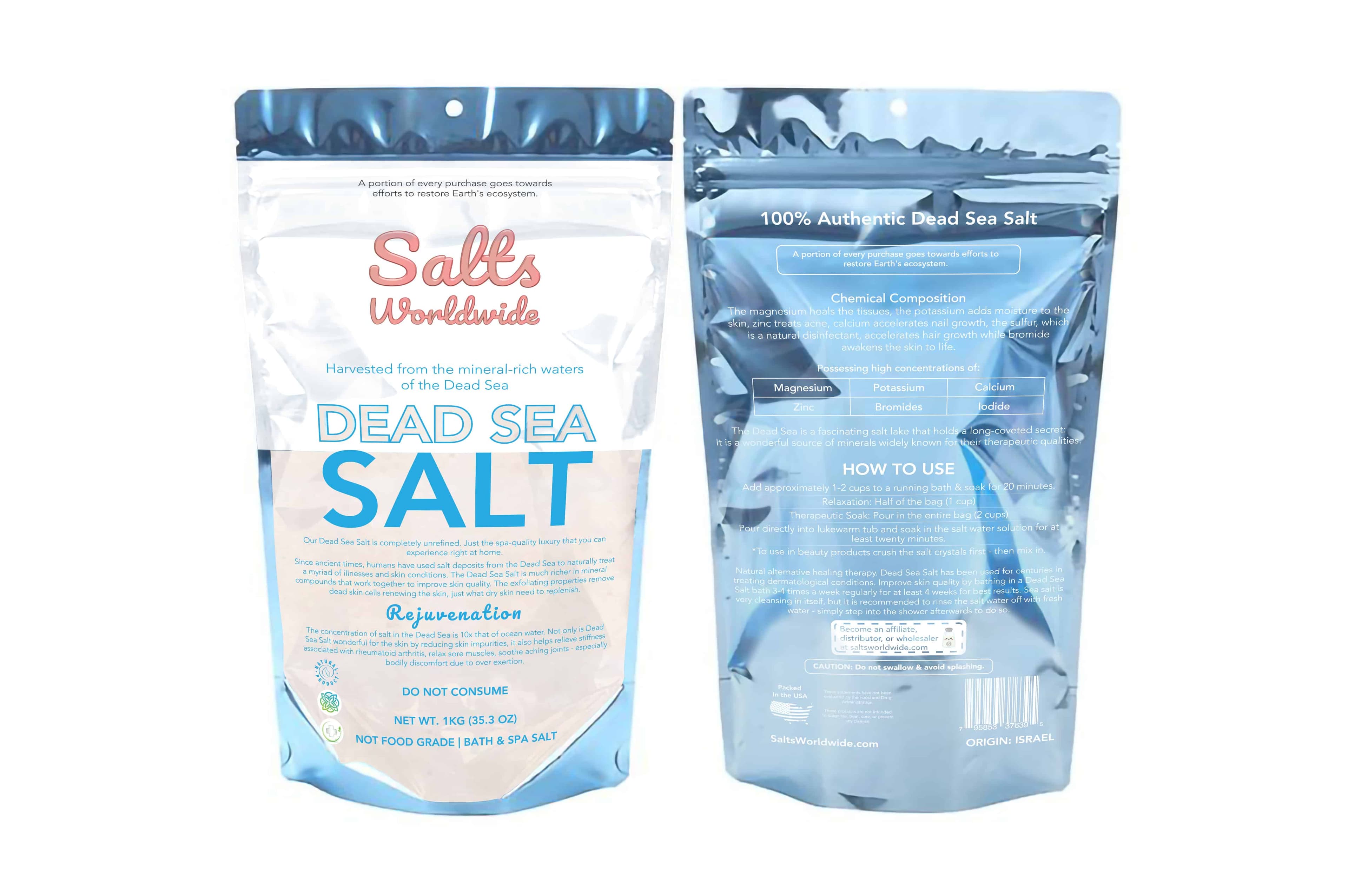
What makes Dead Sea Salt distinct?
Dead Sea Salt comes from one of the world's most recognizable mineral lakes, a landlocked body of water bordered by Jordan, Israel, and the West Bank. As water evaporates in that dry climate, concentrated mineral salts remain behind. The result is very different from a typical table salt or finishing salt. Dead Sea Salt is purchased mainly for bath and spa-style use, not for seasoning food.
The sensory profile is the main reason shoppers choose it. The crystals feel dense and substantial in the hand, dissolve into warm bath water, and create a quiet mineral soak with a clean, briny character. It is the kind of salt people keep for slow evenings, foot baths, bath blends, and simple wind-down routines. It can also be combined with unscented bath oils or dried botanicals when the goal is a more polished home spa ritual.
Dead Sea Salt is often discussed in wellness language online, so this page keeps the framing careful. It contains naturally occurring mineral salts, including magnesium, potassium, calcium, and sodium compounds, but this product should not be used to diagnose, manage, or solve a skin or body concern. Think of it as a bath ingredient with strong origin, texture, and ritual value.
What is Dead Sea Salt used for?
Dead Sea Salt is used primarily for bath soaks, foot soaks, bath blends, and spa-style body care routines. Add it to warm water, let the crystals dissolve, and use the soak as a chance to slow down. The experience is simple: warm water, mineral texture, a quiet pause, and a clean bath finish. If you like unscented products, use it on its own. If you prefer fragrance, blend it with a bath-safe essential oil that has already been properly diluted in a carrier.
It is not a cooking salt. Dead Sea Salt has a mineral composition and flavor profile that are not meant for the table. Keep it clearly labeled and stored away from culinary salts so there is no mix-up in the kitchen. For food, choose Himalayan Salt, French Grey Salt, Fleur de Sel, Black Truffle Salt, Red Salt, Black Salt, or another product clearly intended for culinary use.
For a bath ritual, start with a modest amount and adjust based on tub size and personal preference. More is not automatically better. If your skin feels dry after a soak, rinse with fresh water and moisturize as you normally would. If you have sensitive skin or a known concern, keep the first soak short and stop if it feels uncomfortable.
Texture and mineral profile
Dead Sea Salt crystals are usually coarse, irregular, and heavier than delicate finishing salts. That texture makes them satisfying to pour into bath water and easy to scoop for larger soaks. Once dissolved, the bath water can feel different from plain water, with a smooth mineral quality that many people associate with a spa setting.
The mineral profile is naturally varied because the Dead Sea is a concentrated mineral environment. Magnesium salts, potassium salts, calcium salts, and sodium chloride can all be present. The key is to describe those minerals neutrally. They are part of the salt's origin and composition; they are not promises about what the bath will do to the body.
Store Dead Sea Salt in an airtight container and keep it dry between uses. Bathroom humidity can create clumps, especially if the bag or jar is left open. A scoop helps keep moisture out and makes it easier to measure consistently.
How to use Dead Sea Salt safely
For a full bath, add the salt while the tub is filling so the moving water helps dissolve the crystals. Swirl the water by hand before stepping in, and make sure undissolved crystals are not sitting in a rough pile underfoot. A slow, warm soak of 10 to 20 minutes is enough for most bath routines.
For a foot soak, use a smaller basin and a smaller scoop. Let the salt dissolve before placing your feet in the water. Keep the water warm, not hot, and dry the floor around the basin so the area stays stable. Afterward, rinse if you prefer a clean finish and apply your usual moisturizer.
Do not use bath salts on broken or irritated skin, and do not use them as a replacement for professional guidance. If a bath ever makes you feel lightheaded, too warm, or uncomfortable, step out carefully, cool down, and use plain water. Dead Sea Salt should make the routine feel slower and more intentional, not complicated.
How to choose a Dead Sea Salt size
Choose package size based on how often you plan to soak and whether you are using it for full baths, foot baths, or blending. A smaller package is practical if you are trying Dead Sea Salt for the first time or using it only for occasional foot soaks. A larger package makes sense if you want a regular bath ingredient, are making gifts, or like to keep an unscented base on hand for custom bath blends.
If you create blends, start with plain Dead Sea Salt and add only bath-safe extras. Dried lavender, calendula, or rose petals can make a jar look beautiful, but they can also leave material in the tub, so use a muslin bag if cleanup matters. Oils should be handled carefully because they can make surfaces slick. Fragrance is optional; many people prefer Dead Sea Salt plain because the mineral character is the point.
Compare Dead Sea Salt with Epsom Salt by purpose and feel. Epsom Salt is a familiar magnesium sulfate crystal with a clean, simple bath identity. Dead Sea Salt is a mineral salt blend from a famous source with a denser briny character. Neither should be eaten, and neither needs dramatic claims to be useful. The better choice is the one that fits the bath routine you will actually repeat: full tub, foot basin, unscented soak, or giftable blend.
If you are buying for a household, keep a simple routine card or label with the jar: bath use only, dissolve before stepping in, keep water comfortable, and close the lid after scooping. Clear instructions make the product easier to use and reduce confusion with culinary salts stored elsewhere in the home.
For guests, place the salt in a clearly marked bathroom container rather than a kitchen-style cellar.
Keep a clear label on the container, especially if your pantry also includes culinary salts. Bath salts and food salts should not be stored in identical jars. A simple bathroom shelf, scoop, and sealed lid will keep the routine organized and reduce the chance of confusion.