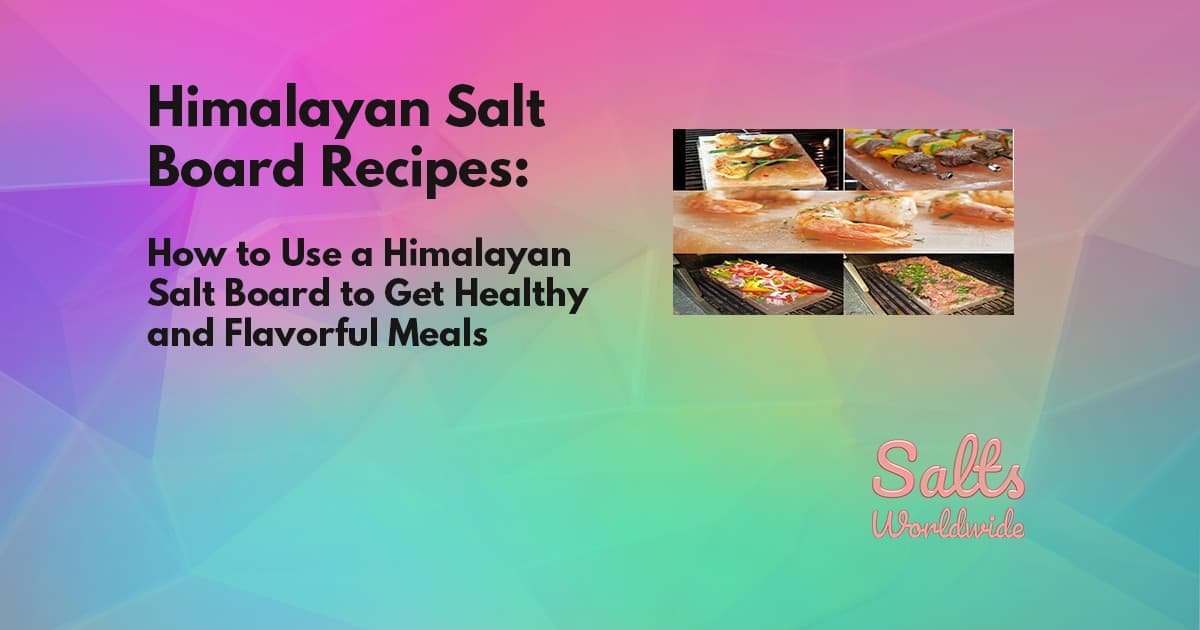
Himalayan Salt Board Recipes: How to Use a Himalayan Salt Board to Get Healthy and Flavorful Meals
A practical guide to Himalayan salt boards: what they are, how to safely heat and clean one, and recipes to try at home. Salt boards season food naturally as it cooks or rests on them, but they are a flavor tool, not a “detox” treatment.
Key Takeaways
- What It Is: A Himalayan salt board (or block) is a slab of solid salt used for cooking, chilling, curing, or serving food.
- Flavor, Not a Detox: Cooking or serving on a salt board seasons food naturally as it contacts the salt — it does not "detoxify" your body or provide meaningful therapeutic benefits.
- Temperature Matters: Heat and cool salt blocks slowly and stay within the manufacturer's recommended range (typically up to about 400–500°F once fully preheated) to avoid cracking.
- Versatile: Salt boards work for grilling, baking, chilling, curing, and serving — from seared salmon and steak to fruit and cheese platters.
- Care: Hand wash only, dry thoroughly, and store somewhere dry to keep your salt block usable for a long time.
Looking to add a new technique to your cooking routine? A Himalayan salt board (also called a salt block or salt slab) is a slab of solid salt that seasons food naturally as it cooks or rests on it. In this guide, we'll cover what a salt board is, how to use one safely, and recipes to try at home.
What is a salt board?
A salt board is a solid slab of Himalayan salt, typically around 8 by 12 inches, used as a cutting surface, cooking surface, or serving platter. Its dense, slightly rough surface lets food sit directly on the salt so it picks up seasoning naturally, without needing to add table salt separately.
Salt boards have been used for generations in various cuisines as a simple way to season and present food. They work well for a wide range of dishes — fish, vegetables, meats, even desserts — anywhere you want a subtle, evenly distributed salt flavor.
Does the size and shape of your salt board matter?
Yes, to some extent. If you plan to use your salt board on a grill or in the oven, a flat, square or rectangular slab is the most practical shape — it sits evenly on grill grates and fits standard oven racks. If you're using it purely as a serving platter or cutting board, shape matters less and you can choose based on presentation preference.
Thicker slabs retain heat and cold longer, which is useful for extended cooking or for keeping chilled foods cold during serving. Thinner slabs heat up and cool down faster, which can be more convenient for quick searing but also means they're more prone to thermal shock if heated or cooled too quickly.
What do you put on a salt board?
Using a salt board is similar to using a regular cutting or serving board, with the bonus that it seasons food as it sits.
Before first use, wash your salt board with hot water and a soft sponge (no soap needed — salt is naturally antimicrobial on its own surface), rinse, and dry it completely.
Good choices for a salt board include vegetables with moderate water content (tomatoes, cucumbers), thin cuts of lean meat or fish, and firm cheeses. Avoid leaving very wet or very fatty foods on the board for extended periods, since excess moisture can wear down the surface faster and fat drippings are harder to clean off.
Herbs like rosemary, thyme, and oregano pair well with foods resting on a salt board. Salt boards also work for baked goods like cookies — the salt adds a subtle savory contrast without needing extra salt in the dough.
The main rule: don't overcook or scorch food on the board, since burnt-on residue is difficult to clean off the porous salt surface.
What is the purpose of a salt board?
A salt board serves multiple purposes in the kitchen: a cutting surface, a cooking surface (for searing or gentle baking), a chilling surface (pre-chilled in the fridge or freezer for cold appetizers), and a serving platter. Its main practical benefit is seasoning food naturally as it makes contact with the salt, reducing the need to add table salt separately.
Do you season a salt board?
No — unlike a cast iron pan, a salt board doesn't need to be seasoned before use. The salt itself is the "seasoning": as food sits on or cooks on the board, it picks up a light, even coating of salt flavor directly from the surface. That's the main practical benefit of cooking or serving on salt rather than a neutral surface.
Are Himalayan salt blocks and salt boards the same?
"Salt block" and "salt board" are generally used interchangeably to describe the same product: a solid slab of Himalayan salt. Some sellers use "board" for thinner slabs meant mainly for serving, and "block" for thicker slabs meant for cooking, but there's no strict industry standard — check the thickness and manufacturer's guidance for your specific piece before using it for high-heat cooking.
Both can be used to add flavor to food: sprinkle nothing extra needed, since simply placing food on the slab (or briefly cooking on it) transfers salt flavor. Used correctly and cared for properly, a good salt block can last for years of regular use.
What foods are cooked best on a salt board?
A salt board works well for a range of dishes:
Salmon: The natural fat in salmon helps it cook evenly on a salt block without drying out too quickly. Score the skin so it doesn't curl during cooking.
Steak: A good, thick steak sears well on a preheated salt block, picking up seasoning directly from the surface.
Chicken wings: Cooking wings on a Himalayan salt board can produce a crisp exterior while keeping the inside juicy.
Shrimp: Shrimp cook quickly on a salt block and pick up seasoning fast; serve with lemon wedges for extra brightness.
Sides: Potatoes, rice, or quinoa can be finished on a warm salt board alongside your main dish.
Serving (not cooking): A chilled salt board also works well as a serving surface for cheese plates, cured meats, sushi, or fruit, where it's adding flavor and visual presentation rather than heat.
Can you use a salt block in the oven?
Yes, Himalayan salt blocks rated for cooking can be used in the oven. The key is slow, gradual temperature changes — salt, like any dense mineral slab, can crack from thermal shock if heated or cooled too quickly.
A safe general approach: place the salt block in a cold oven, then set the oven to a low temperature (around 200–250°F) and let it heat gradually over about an hour before increasing to your cooking temperature. Always follow the specific manufacturer's guidance for your slab, since thickness and quality affect how much heat it can safely handle.
Once properly preheated, you can cook thin cuts of meat or fish, roast vegetables, cook eggs, or even reheat foods directly on the block.
How to Find the Best Salt Block to Cook On
A few things to look for when choosing a salt block:
– Choose a solid, food-grade Himalayan salt block from a reputable seller — avoid anything marketed for decorative or bath use only, since not all salt slabs are rated for cooking heat.
– Pick a size that comfortably fits your grill grates, oven, or serving space.
– A thicker, heavier block holds heat and cold longer and is generally more durable for repeated cooking use than a thin, decorative slab.
Tips for Cooking on a Salt Board
A few practical tips to get the most out of your Himalayan salt block:
– Never put a salt block in the dishwasher — the water, heat, and detergent will degrade it quickly. Hand wash with a damp sponge and, if needed, a small amount of mild soap and water; avoid soaking it.
– Before first use, give the block a quick rinse and let it air dry completely.
– Preheat cooking blocks gradually, as described above, and let them cool gradually after cooking before cleaning.
– Dry the block thoroughly with a soft cloth after every wash, and let it air dry completely before storing, since trapped moisture can cause the salt to break down over time.
– Store your salt board wrapped or in a dry cabinet, away from humidity, to keep it from absorbing ambient moisture.
– Never scrub a salt block with metal utensils or abrasive scouring pads — they can scratch and damage the surface.
– Use a chilled salt board as a serving tray for sushi, cheese, fruit, or other cold appetizers — it also works well for holiday table presentations.
– When not cooking on it, place the block on a heat-resistant trivet or mat to protect your countertop.
Salt Board Recipes to Try at Home
Now that you know the basics, here are a few recipes to try on your Himalayan salt board:
Roasted Vegetables: Toss cut vegetables with olive oil, pepper, and a little extra seasoning (the board itself adds salt). Spread on a preheated salt board and roast at 375°F for 20-25 minutes.
Grilled Cheese: Assemble your sandwich with butter on the outside, place it on a preheated salt board over medium-high heat, and cook until both sides are golden and the cheese melts.
Fruit Slices: Place sliced fruit on a chilled salt board for a naturally seasoned sweet-and-salty snack — no added sugar or salt needed.
Homemade Chips: Toss thin potato slices in olive oil and pepper, then bake on the salt board at 375°F for 15-20 minutes.
Antipasto Skewers: Thread cherry tomatoes, mozzarella, and olives onto skewers, place on a chilled salt board, and drizzle with olive oil and balsamic vinegar.
Quiche: Bake your quiche as usual, then rest the finished dish briefly on the salt board before serving for a subtle flavor boost and an attractive presentation.
Pizza: Roll out dough directly on a lightly floured salt board, top as desired, and transfer to a preheated oven at 425°F for 20-25 minutes.
Salad: Serve mixed greens with your favorite toppings directly on a chilled salt board for a lightly seasoned salad course.
Cooking on Salt Block for Flavorful Meals
Once you're comfortable with the basics, the only real limits on salt-board cooking are your own creativity. A few reminders as you experiment:
Salt blocks can be used on the grill, but keep the temperature moderate — generally no higher than about 400°F once fully preheated — both to protect the slab from cracking and to avoid over-salting food that sits on it too long.
Because the salt itself adds flavor, you may need less added seasoning than usual — taste as you go.
Salt boards work best for single servings or smaller cuts rather than large roasts, since bigger pieces may not fit or heat evenly on the slab.
Where to Buy a Himalayan Salt Board
Salts Worldwide's Himalayan Salt products are a great starting point if you're building out your salt-board cooking setup, and pair well with the recipes above.