Find the Best Himalayan Salt: Your Guide to Buying Himalayan Salt
A practical guide to buying Himalayan salt: the real differences between pink, white, and black (kala namak) varieties and grades, what the mineral and "detox" claims actually mean, and where to buy pure, unprocessed Himalayan salt.
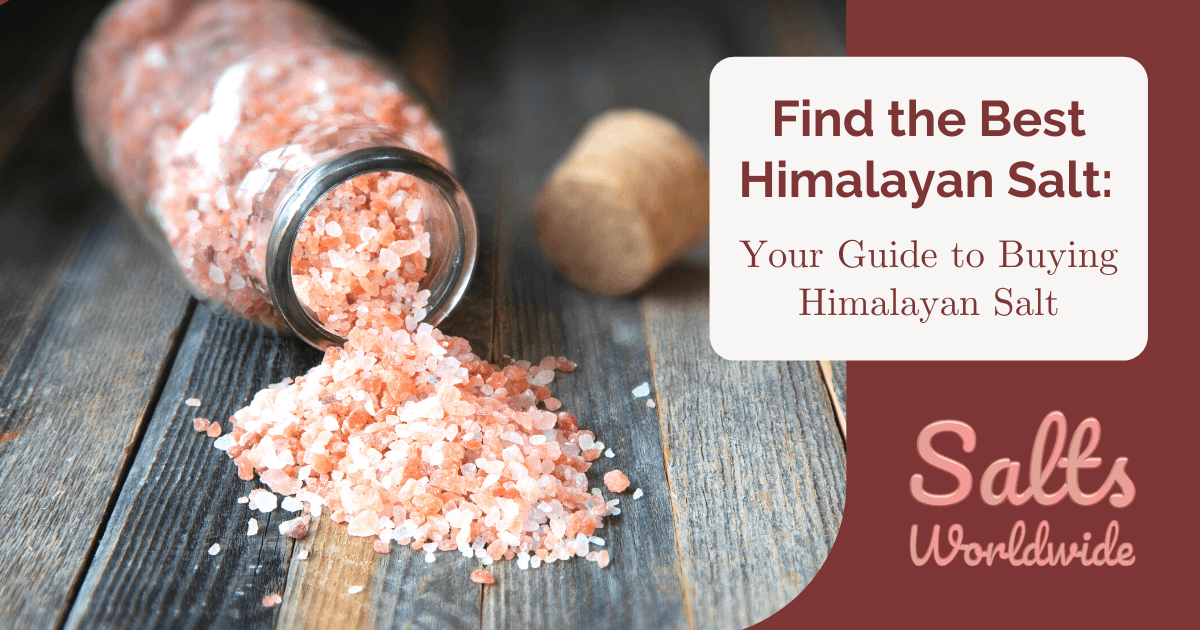
Himalayan salt is prized for its pink color, larger crystal texture, and less-processed profile compared to refined table salt — though despite what you may read elsewhere, it isn't a meaningfully "healthier" salt in any clinical sense (more on that below). With so many options on the market, how do you know which one to buy? This guide covers the real differences between Himalayan salt types and grades, separates the marketing from the facts, and helps you choose the right one for your kitchen or bath.
Ready to buy? Shop our pure, unprocessed Himalayan Salt.
Is there a difference between Himalayan salt and other types of salt?
Himalayan salt, like other salts, is primarily sodium chloride. The real differences are crystal size, trace mineral content, and processing. Himalayan salt crystals are typically larger than table salt or sea salt crystals, which affects texture and how salty a dish tastes for a given volume.
Table salt is typically mined or evaporated from brine and then heavily refined, with anti-caking agents added and iodine added back in. Himalayan salt is mined by hand from ancient sea beds, primarily at the Khewra Salt Mine in Pakistan, and sold in a much less processed, unrefined form.
Himalayan salt does contain more trace minerals — iron, magnesium, potassium, calcium, and others — than heavily refined table salt. That's a real difference, but according to WebMD, those minerals are present in amounts "far too low in concentration to help with your nutrition," so it isn't a meaningful nutritional one.
Which salt is better, kosher or Himalayan?
Kosher salt and Himalayan salt both season food well (kosher salt is also popular for curing meats, thanks to its large, flat crystals). Neither is meaningfully "healthier" than the other — both are sodium chloride, and Cleveland Clinic notes that gram for gram, the sodium content across salt types is essentially the same.
The real differences are practical. Himalayan salt's larger crystals mean you may need more of it by volume to match the saltiness of fine kosher salt, and it brings a mild color and flavor many cooks prefer for finishing dishes. Kosher salt's flat crystals are easy to pinch and distribute evenly, which is why many cooks default to it for everyday prep.
Whichever you choose, total sodium intake matters more than the source — it's worth watching your overall sodium, especially from processed foods, regardless of which salt is in your shaker.
What are the different types of Himalayan salt?
There are a few common forms of Himalayan salt, sorted by crystal size:
- Fine grain salt
- Coarse grain salt
- Crystal salt
Himalayan salt is also sold in a few different colors:
- Pink Himalayan salt — the most common variety, colored by trace iron oxide.
- White Himalayan salt — rarer, with fewer visible mineral inclusions.
- Black Himalayan salt (kala namak) — a kiln-fired, intentionally processed salt with a distinctive sulfurous smell, widely used in South Asian cooking.
You may also see "purple Himalayan salt" advertised online. It isn't a standard, well-documented variety of Himalayan rock salt, so if you come across it, ask the seller where it's actually sourced and what gives it its color before assuming it's the real thing.
Where is Himalayan black salt commonly used for?
Black Himalayan salt (kala namak) is mainly a culinary ingredient. It's kiln-fired and naturally contains sulfur compounds, which give it a pungent smell and an egg-like flavor when cooked — that's why it's a favorite with vegan and vegetarian cooks for dishes like tofu scrambles, vegan omelets, and egg-free salads. It's also a staple across South Asian cuisine, used in chaats, chutneys, raitas, and fruit salads, and has a long history in traditional Ayurvedic practice.
One thing it isn't: a proven treatment for skin conditions. You may see it marketed as a remedy for acne, rosacea, psoriasis, or eczema — those claims aren't backed by clinical evidence, so don't substitute it for dermatologist-recommended treatment if you're managing a skin condition.
What is the purple Himalayan salt used for?
"Purple Himalayan salt" isn't a standard, independently documented variety of Himalayan rock salt the way pink, white, and black (kala namak) are. If you see it for sale, look for clear information about where it's actually mined and what gives it its color — a legitimate seller should be able to tell you both.
What is Himalayan pink salt good for?
Himalayan pink salt is most useful in the kitchen. Its fine grain and mild flavor make it easy to use for everyday cooking and seasoning, and its coarser, more textured crystal varieties work well as a finishing salt for extra crunch and visual appeal.
You may see it marketed as a treatment for arthritis, asthma, or other inflammatory conditions, or as an immune-system booster. There's no clinical evidence behind any of that. WebMD notes that claims like these "are unproven," and Cleveland Clinic points out that the trace minerals in pink salt are present in amounts far too small to meaningfully affect your health. If you're managing arthritis, asthma, or another medical condition, talk to your doctor about treatment — don't rely on salt for it.
Pink Himalayan salt does contain more trace minerals than table salt (magnesium, potassium, calcium, and others), which is part of what gives it its color and flavor — it's just not enough to count as a meaningful source of those nutrients.
Which brand of pink salt is best?
You'll find plenty of companies advertising their pink salt as "the best" or "purest." A few things actually matter when comparing brands:
- Where it's sourced from, and whether the seller is transparent about it
- Whether it's unrefined and free of anti-caking agents or other additives
- Grain size (fine, coarse, or crystal) appropriate for how you plan to use it
- Price per pound, especially for bulk or wholesale purchases
Be skeptical of brands that lean heavily on "detox," "toxin-free," or specific disease-related claims to sell salt — that's marketing, not medicine. Our Himalayan salt is sourced from the Khewra Salt Mine in Pakistan and sold unprocessed, with no additives, at wholesale-friendly pricing.
Which is better, white or pink Himalayan salt?
Pink Himalayan salt is the more common variety and gets its color from trace iron oxide. White Himalayan salt is rarer and has fewer visible mineral inclusions, giving it a cleaner look — but it isn't meaningfully "purer" or healthier in a clinical sense, since both are still primarily sodium chloride.
The choice comes down to preference: color and presentation, a very slightly different taste some people notice, and price, since white Himalayan salt tends to be harder to source and more expensive. Neither is the "better for your health" choice — moderate your total sodium intake regardless of which one you pick.
Which Himalayan salt is the healthiest for cooking?
There isn't a meaningful health difference between the grades of Himalayan salt for cooking — the real differences are texture and how they perform in the kitchen. Fine-grain salt dissolves quickly, which makes it good for baking, sauces, and dishes like rice or vegetables, where it needs to distribute evenly. Coarser, crystal-style salt dissolves more slowly and is better suited to finishing a dish just before serving, where you want a visible crunch and burst of saltiness.
As with any salt, it's easy to over-season with the coarser, more textured crystals since it's harder to gauge how much you're adding by eye — start with less than you think you need and adjust to taste.
Which Himalayan salt is best for weight loss?
None. There's no scientific evidence that any variety of Himalayan salt helps with weight loss. You may see claims that it contains "84 trace minerals" that "detoxify" the body by drawing toxins out of cells through osmosis — that's not how the body works. Your liver and kidneys handle detoxification on their own, and Cleveland Clinic is direct about it: claims that Himalayan salt water ("sole water") boosts energy, aids weight loss, or detoxifies the body "aren't based on real science."
Weight management comes down to your overall diet and calorie balance, not the type of salt you cook with. Swapping in pink salt for table salt won't hurt your weight-loss goals, but it won't help them either — treat it as a flavor choice, not a diet strategy.
Are there different grades of Himalayan salt?
Himalayan salt, particularly pink Himalayan salt, comes in different grades based on crystal size — most commonly coarse and fine. Coarse Himalayan salt works well for everyday cooking and salt mills, while fine Himalayan salt is a good substitute anywhere you'd use table or kosher salt, including baking. Which grade to choose comes down to how you plan to use it, not a health difference between them.
What is the purest Himalayan salt?
You may have read claims about which Himalayan salt is the "purest." Some say it's white Himalayan salt, since it tends to have the fewest visible mineral inclusions of the common varieties.
When buying Himalayan salt, though, your decision shouldn't rest on purity alone — consider how you'll actually use it, too. The sections below cover the purity and quality features worth checking.
How can you tell if Himalayan salt is pure?
As Himalayan salt has become more popular, it's worth knowing how to gauge its quality.
Himalayan salt is mined from ancient sea bed deposits and hand-cut into blocks, then transported for processing. From there, it's either ground for table use or crushed for cooking-grade crystals. Genuine Himalayan salt is produced without added heat or chemical processing — it's simply mined and ground, which is part of why it retains its trace minerals and unrefined texture.
One practical way to check authenticity: pure Himalayan salt is naturally somewhat hygroscopic, meaning it absorbs a little moisture from the air, so it should be stored in a dry place.
How to choose the best Himalayan salt?
Choosing the best Himalayan salt depends on what you're using it for. If you're cooking or seasoning everyday meals, there's no need for an expensive specialty product — a basic fine or coarse pink Himalayan salt works well. If you want it for a relaxing bath soak, look for a coarser, unrefined salt sold specifically for bath use.
Beyond that, it mostly comes down to preference: some people care more about sourcing, others about taste, grain size, or price. Whatever you choose, know that the health claims around Himalayan salt are usually oversold — buy it because you like the flavor, texture, and story behind it, not because it will treat a medical condition.
The best Himalayan salt – What you should look for
The best Himalayan salt for you is the one that fits how you'll actually use it: fine grain for everyday cooking and baking, coarse or crystal grain for finishing dishes or a salt mill, and an unrefined bath-grade salt if you're after a relaxing soak. Beyond that, look at purity (no additives), sourcing transparency, and price per pound.
If you want a relaxing at-home spa moment, a warm bath with Himalayan salt is a genuinely nice way to unwind — just don't expect it to detoxify your body or treat a health condition. Enjoy it for the relaxation itself.
Shop our Himalayan Salt — mined at the Khewra Salt Mine in Pakistan and sold unprocessed, with no additives.
A couple more options to consider
Fleur De Sel: A rare and expensive form of sea salt harvested in parts of France, known to be one of the highest-quality salts money can buy.
Pink Himalayan Salt: A favorite among chefs for cooking and finishing dishes, and equally at home in a relaxing bath soak.