Does Himalayan Salt Expire?
Himalayan salt does not expire — as a mineral, it’s chemically stable indefinitely. Here’s what actually affects it over time (moisture and odor exposure) and how to store it, plus care tips for solid salt blocks and boards.
Key Takeaways
- No Expiration Date: Himalayan salt does not expire or spoil. As a mineral, it's chemically stable indefinitely under normal conditions.
- Storage Still Matters: While it won't "go bad," Himalayan salt can clump or absorb odors if stored improperly, so proper storage keeps it at its best.
- How to Store It: Keep it in an airtight container, away from moisture, heat, and direct sunlight.
- Salt Blocks Need Extra Care: Himalayan salt blocks and boards used for cooking should be dried thoroughly after each use to prevent surface breakdown over time.
If you've bought a bag of Himalayan pink salt and wondered whether it can go bad sitting in your pantry, the short answer is no. Himalayan salt is a naturally mined mineral, and minerals don't spoil the way food does. Here's why, and how to store it so it stays at its best.
Why Himalayan salt doesn't expire
Himalayan salt is mined from ancient underground deposits, primarily in the Khewra Salt Mine in Pakistan's Punjab region — salt that has remained chemically stable for millions of years underground. Because it's a natural mineral (sodium chloride, with trace minerals) rather than an organic food product, it isn't subject to the bacterial growth, oxidation, or enzymatic breakdown that cause most foods to spoil.
This is true of salt in general, not just the Himalayan variety: pure salt has an indefinite shelf life. Manufacturers sometimes print a "best by" date on salt packaging, but that's typically a labeling convention or refers to added ingredients (like iodine, which can degrade slowly over years in iodized salt) rather than the salt itself going bad.
Does Himalayan salt need any special storage?
Himalayan salt won't spoil, but how you store it does affect its texture and usability over time:
Moisture: Salt is hygroscopic, meaning it naturally absorbs moisture from the air. In a humid environment, this can cause clumping. It doesn't ruin the salt, but it can make it harder to measure or sprinkle. Store it in an airtight container to minimize this.
Odors: Salt can pick up odors from strongly scented items stored nearby, so keep it away from spices or cleaning products with strong smells.
Light and heat: Direct sunlight and heat won't chemically degrade the salt, but a cool, dark, dry cabinet is still the most practical storage spot to avoid moisture buildup near a stove or window.
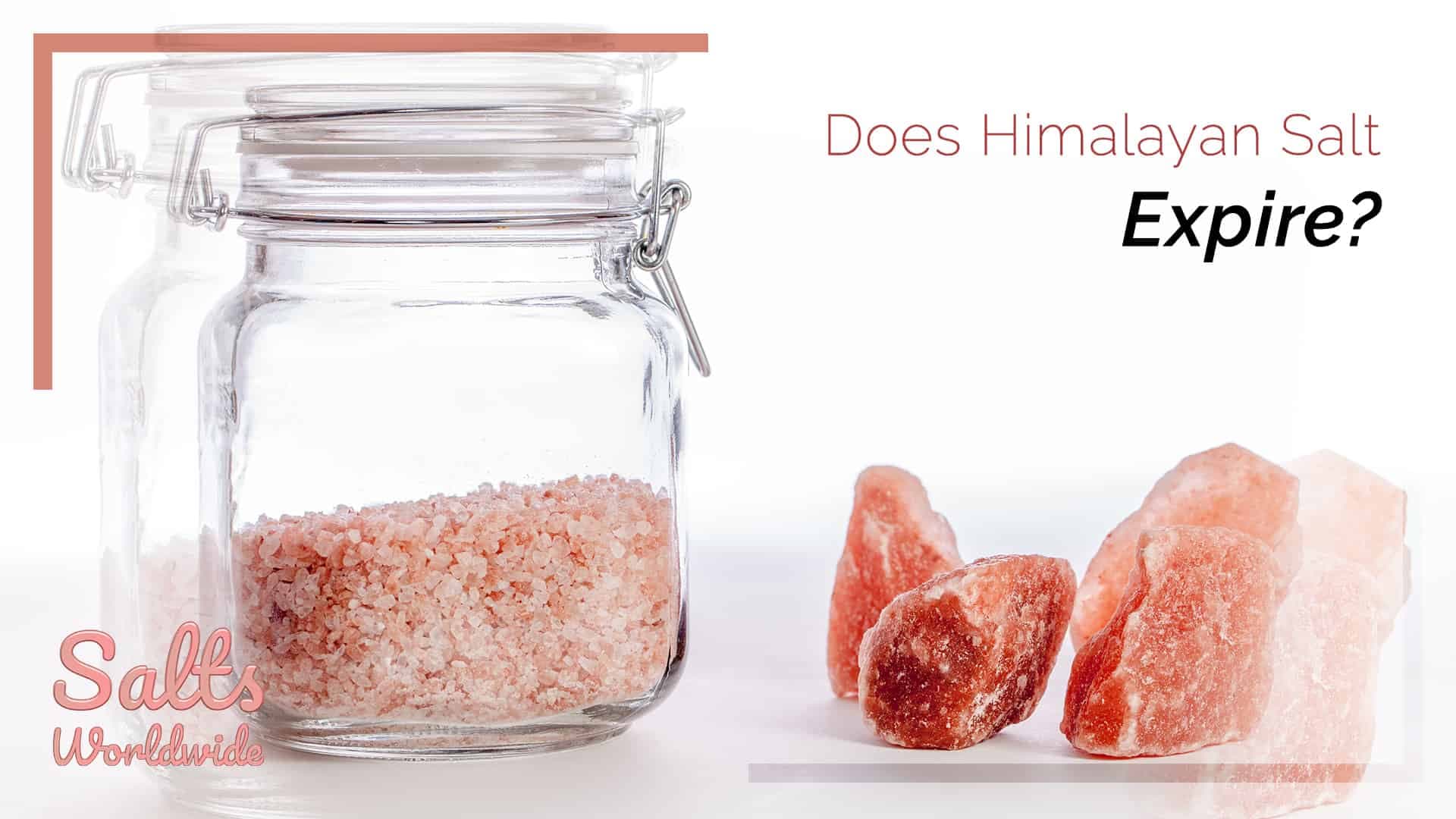
If you buy Himalayan salt in bulk, repacking it into smaller airtight containers (glass jars with tight lids work well) makes it easier to keep the portion you're using dry while the rest stays sealed.
What about Himalayan salt blocks and boards?
Solid Himalayan salt blocks and boards, used for cooking or serving, follow the same basic rule — the salt itself won't expire — but they need more careful maintenance than loose salt because they're porous and get exposed to food residue and moisture during use.
After each use, hand wash your salt block with a damp sponge (no dishwasher), then dry it completely before storing. A salt block that's left damp or stored in a humid spot can gradually soften, crack, or break down at the surface over repeated use. With proper care and thorough drying, a good salt block can last for years.
Bottom line
Himalayan salt doesn't have a true expiration date, and properly stored salt can be used indefinitely. The main things to watch for are clumping from moisture exposure and, for solid salt blocks, surface wear from inadequate drying between uses — not spoilage.
Shop Himalayan Salt
Looking to stock your pantry? Salts Worldwide's Pink Himalayan Salt is a great everyday salt for cooking, baking, and finishing — and stored properly, it will keep indefinitely.