
Key Takeaways
- Treat each cut differently: quick, high‑heat methods (sear, reverse‑sear, grill, sous‑vide + sear) for venison backstrap recipes and venison steak recipes; low‑and‑slow braising or slow cooker for venison roast recipes and venison stew meat recipes.
- Protect juiciness: short wet or dry brines and brief buttermilk soaks improve moisture for venison recipes; add 15–30% fat in ground venison meatloaf recipes and venison sausage recipes for better texture.
- Balance flavors: pair venison with acid and sweetness (cherry, cranberry, balsamic), earthy sides (mushrooms, root vegetables, barley) and finishing fats or salts to counter lean, gamey notes.
- Season smart: use herb‑garlic rubs, crushed juniper for backstrap, and bold chili blends (ancho, smoked paprika, cocoa) for venison chili recipes; finish delicate cuts with fleur de sel or Himalayan flakes.
- Avoid common errors: don’t overcook lean cuts, don’t overtrim useful fat, brown before braising, slice against the grain, and time salt correctly to retain moisture.
- Safety first: refrigerate game immediately, keep cuts ≤40°F (4°C), cook ground venison to 160°F (71°C), and never consume meat showing spoilage or from CWD‑positive animals (follow USDA/FoodSafety guidance).
- Weeknight and batch options: use slow‑cooker venison stew and make large pots of venison chili recipes for easy dinners; adapt beef/pork conversions using ground‑meat technique guides for reliable recipes with venison.
- Finish thoughtfully: small touches—compound butter, red‑wine or berry reductions, and a delicate finishing salt—elevate roast venison recipes, recipes for backstrap venison, and venison recipes for dinner without masking the meat.
Venison recipes bring a rare combination of lean, gamey flavor and culinary possibility, whether you’re hunting for weeknight inspiration or planning venison recipes for dinner; this guide moves from venison steak recipes and venison backstrap recipes to hearty venison chili recipes, classic venison roast recipes and slow-simmered venison recipes stew. You’ll find recipes with venison that cover quick sears and reverse-sear techniques, venison recipes easy enough for a simple supper, venison recipes slow cooker for hands-off comfort, and the 10 best venison recipes that include everything from recipes for backstrap venison and recipes for venison backstrap to ground venison meatloaf recipes and recipes for venison meatloaf. We’ll also walk through venison stew meat recipes and recipes venison stew, explore venison meat recipes like venison sausage recipes and native american venison recipes influences, and touch on playful corners such as venison recipes dreamlight valley—so you can cook confidently, avoid common mistakes, and know how to season, soak, and serve every cut to its best advantage.
Cooking Foundations for Venison (venison recipes)
What is the best method of cooking venison?
For most home cooks the “best” method depends on the cut: treat tender cuts (backstrap/loins, steaks) with quick, high‑heat methods to preserve juiciness; treat tough cuts (shoulder, shank, neck, stew meat) with low‑and‑slow, moist‑heat cooking to break down collagen and develop flavor.
Quick, high‑heat for tender cuts
- Methods: pan‑sear, grill, or reverse‑sear; finish with a hot sear and short resting period.
- Target doneness: aim for rare–medium‑rare for whole muscle venison (about 125–135°F / 52–57°C pulled from heat, carryover to safe serving temp); overcooking dries out lean venison fast. Balance USDA guidance (145°F for whole cuts with rest) with texture preferences and source confidence. See USDA and FoodSafety guidance for safety thresholds.
- Techniques to keep it juicy: remove silver skin, leave a little fat or baste with butter/oil, rest 5–10 minutes, and slice thin across the grain. Sous‑vide is ideal for precise control (125–130°F for 1–3 hours, then a hot sear).
Low‑and‑slow for tough cuts
- Methods: braising in the oven, Dutch oven, pressure cooker, or slow cooker — these are the best approaches for venison roast recipes, venison stew meat recipes, and cuts destined for venison chili recipes.
- Goal: maintain gentle simmering heat long enough to convert collagen to gelatin (internal braise temps often finish in the 190–205°F / 88–96°C range), producing fork‑tender meat and rich mouthfeel.
- Practical tip: brown first for Maillard flavor, then add aromatic liquids and cook with a lid until the meat falls apart.
Ground and processed venison
- Ground venison, meatloaf and sausage must reach higher internal temps (160°F / 71°C) for safety; add fat (pork, bacon, or oil) and binders to improve texture — essential for ground venison meatloaf recipes and venison sausage recipes.
Safety and sourcing reminder: if you’re unsure about harvesting or processing, err on the side of higher internal temps and thorough cookery; FoodSafety.gov and USDA are authoritative resources for wild game handling and safe cooking.
Venison steak recipes and quick techniques — sear, reverse sear, and pan methods; recipes with venison and venison backstrap recipes; recipes for backstrap venison
I treat venison backstrap and loins like the premium cuts they are: fast, fierce heat, minimal fuss. For venison steak recipes I recommend three reliable approaches that preserve flavor and texture while minimizing dryness.
- Pan‑sear: Preheat a heavy pan until smoking, season simply with salt and cracked pepper, sear 1–2 minutes per side for thin steaks, 2–3 minutes per side for thicker pieces. Finish with butter, garlic and thyme; rest, then slice against the grain. Use a finishing salt like fleur de sel sparingly to elevate flavor (fleur de sel finishing salt).
- Reverse‑sear: Slow the initial cook in a low oven or sous‑vide to target temp, then blast with a hot sear for crust. This gives even doneness through the steak and is forgiving for backstrap — perfect when serving recipes for backstrap venison to guests.
- Grill and char: High direct heat, quick flips, and a brief rest. Brush lightly with oil, season, and use a meat thermometer to avoid overshoot. For lean game, finishing with a trace mineral Himalayan finishing salt adds depth without overpowering the venison (Himalayan pink salt).
Additional finishing and prep tips I use for recipes with venison:
- Short brine or buttermilk soak (30–90 minutes) for moisture retention; avoid long acidic marinades on prime backstrap.
- Sous‑vide as a fallback for perfect doneness, then sear for color; this works exceptionally well for venison steak recipes and recipes for venison backstrap when consistency matters.
- Pair bold pan sauces (red wine reduction, juniper‑berry jus) with seared backstrap; for weeknight venison recipes for dinner keep it simple: a herb butter or quick pan sauce showcases the meat.
For ground venison or mixed preparations, consult our guide to ground‑meat techniques to adapt ground venison meatloaf recipes and venison sausage recipes into reliably textured dishes (ground‑meat recipe ideas).

Flavors and Pairings for Venison
What goes well with venison?
Venison pairs best with ingredients that balance its lean, forested character: acid and sweetness to brighten, earthy components to echo its gamey notes, and added fat or umami to round mouthfeel. For me, that means pairing venison recipes with tart fruit reductions (cranberry, cherry, pomegranate), root vegetables (parsnip, carrot, beet), wild mushrooms, and legumes like lentils or barley. Those elements work across venison backstrap recipes, venison roast recipes, and venison stew meat recipes.
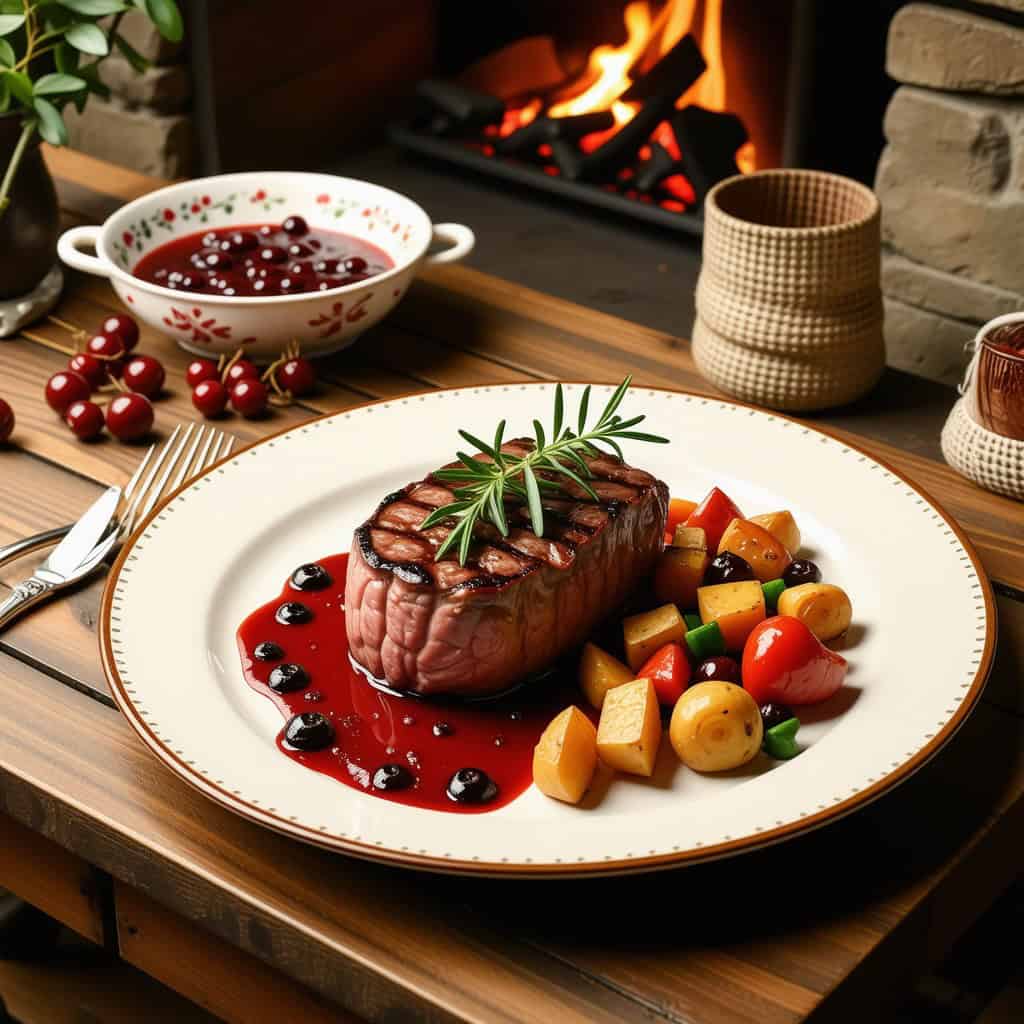
- Acid + sweet: Red‑wine or balsamic reductions, berry compotes and apple sauces cut richness and lift flavor—ideal for roast venison recipes or a pan sauce for recipes for backstrap venison.
- Earthy notes: Mushrooms, roasted root veg, chestnuts, and herbs (rosemary, thyme, sage, juniper) accent the natural game notes in venison steak recipes and venison recipes stew.
- Fat & umami: Because venison is lean, I always add fat—basted butter, pancetta, duck fat, or a pork fat blend for ground venison meatloaf recipes and venison sausage recipes—to improve succulence and flavor balance.
- Textural contrast: Creamy polenta or mashed parsnips, crisp pickles or a bright slaw, and toasted grains (farro, barley) add the bite and soak up sauces in venison chili recipes or recipes venison stew.
When building recipes with venison I think in layers: brown for Maillard flavor, add an acidic element for brightness, and finish with a pat of butter or a sprinkle of a delicate finishing salt to elevate the profile without masking it.
Sides, sauces, and wine pairings for roast venison recipes and venison recipes for dinner; herbs, root vegetables, and fruity reductions to complement roast venison recipes
For a dinner centered on venison, pick sides and sauces that respond to the cut and cooking method. Lightly roasted root vegetables and a starch like mashed potatoes or parsnip purée suit seared backstrap and roasts alike. For braised or slow‑cooked venison recipes stew, choose barley, polenta, or buttered egg noodles that absorb the braising liquid.
- Sauces: Red‑wine reduction, port and berry jus, juniper‑berry pan sauce, or a cocoa‑hint mole for venison chili recipes. For recipes for venison backstrap a simple herb‑and‑garlic butter or a shallow pan jus keeps the meat center stage.
- Herbs & aromatics: Rosemary, thyme, bay leaves and whole juniper berries are classic for roast venison recipes; garlic and shallot combine well in sauces and stews. For global spice profiles in venison sausage recipes or chili, use smoked paprika, cumin, and coriander.
- Wine & beverage pairings: Pinot Noir and Gamay for lean backstrap and delicate sauces; Syrah/Shiraz or a medium‑bodied Cabernet Franc for richer roast venison recipes with berry reductions. For spicy venison chili recipes, a malty amber ale or a smoky porter complements the dish.
- Finishing salts & seasoning: A delicate sprinkle of fleur de sel on rested slices highlights texture and sweetness—use sparingly (fleur de sel finishing salt). For mineral depth on roasted plates, a light dusting of Himalayan pink salt can add subtle complexity (Himalayan pink salt).
Practical pairing examples I use when planning venison recipes for dinner:
- Seared venison backstrap with cherry‑port reduction, roasted baby carrots, and parsnip purée.
- Slow‑braised shoulder served over barley with mushrooms and thyme—classic recipes venison stew approach.
- Hearty venison chili recipes with ancho and cocoa, served with cornbread and a crisp cabbage slaw.
- Ground venison meatloaf recipes enriched with bacon and served with mashed potatoes and pickled red onions.
Pair thoughtfully: match intensity (light wines and simple sides for backstrap; bold sauces and robust sides for braises or chili) and always finish lean cuts with a fat or salt element to ensure each bite of your venison meat recipes is balanced and memorable.
Preparing and Marinating Game
What is best to soak deer meat in before cooking?
Wet brine (light salt solution) — best all‑purpose soak for venison:
- Why: A wet brine (salt + small amount sugar in water) improves moisture retention in lean venison meat recipes, reduces gamey notes, and seasons evenly for roasts, stew meat, and cuts used in recipes with venison.
- Basic ratio & timing: 1/4 cup kosher salt per quart (1 L) of water ± 2 tbsp sugar; refrigerate and soak 30 minutes to 4 hours for tender cuts (backstrap/loins), 4–12 hours for larger roasts or venison stew meat recipes. Over‑brining makes meat too salty and can change texture.
- Practical tip: Rinse quickly and pat dry after brining, then proceed to sear or braise (helps with crust formation for venison steak recipes or roast venison recipes).
Buttermilk or yogurt soak — for mild tenderization and flavor mellowing:
- Why: Dairy soaks gently tenderize and neutralize strong game flavors while adding lactic richness; excellent for ground venison meatloaf recipes, venison sausage recipes, or thin backstrap slices destined for quick sears.
- Timing: 1–4 hours for steaks or strips; up to 8 hours for tougher pieces. Rinse or blot before cooking to avoid excess surface moisture that inhibits browning.
Acidic marinades — use sparingly and briefly:
- Why: Vinegar, wine, citrus or beer will tenderize and add flavor, but extended exposure can make lean venison mushy and mask its character. Ideal for cuts used in venison chili recipes or quick marinated grill recipes.
- Timing & balance: Marinate 30 minutes to 3 hours for steaks/backstrap; up to 6 hours for tougher pieces. Include oil and aromatics (garlic, herbs) to protect meat surface and aid flavor infusion.
Brining, acidic marinades, and enzymatic tenderizers for venison stew meat recipes and ground venison recipes; recipes venison stew prep tips
I rely on method-by-cut: for venison stew meat recipes and recipes venison stew a light wet brine or short acidic marinade helps seasoning penetrate while preserving texture for long braises. Enzymatic tenderizers (fresh pineapple or papaya) work only in small doses—10–45 minutes—and are best reserved for very tough off‑cuts; otherwise they can produce an undesirable mushy texture.
- Dry brine for quick sears: For venison backstrap recipes and seared venison steak recipes, a short dry brine (30 minutes to 2 hours) seasons and firms the surface for a better crust.
- Brine then brown: For stew and chili, brine larger pieces 4–12 hours when appropriate, then brown thoroughly to build Maillard flavor before adding liquids—this step transforms venison stew meat recipes into deeply flavored stews.
- Ground preparations: For ground venison meatloaf recipes and venison sausage recipes, prioritize added fat and binders over long soaks; a brief buttermilk soak can mellow flavor, but texture comes from proper fat ratio and gentle handling.
- Safety & handling: Always refrigerate while soaking (≤40°F / 4°C), discard or boil used marinades before using as sauce, and follow USDA and FoodSafety.gov guidance for safe handling and internal cooking temperatures.
For practical marinades and marinade-to-cook transitions I use tested technique guides and adapt them to each dish type—short dry or wet brines for backstrap and steaks, measured wet brines for roasts, and brief acidic or dairy soaks for tougher pieces destined for braises or ground applications.
Common Pitfalls and How to Avoid Them
What are common mistakes when cooking venison?
Cooking venison well requires different techniques than beef; common mistakes turn high‑quality venison into a dry, tough, or overly “gamey” meal. Below I list the most frequent errors, why they matter, and practical fixes you can apply to all your venison recipes—whether you’re searing backstrap, braising a roast, or making ground venison meatloaf recipes.
-
Treating venison exactly like beef.
Why: Venison is much leaner than beef and lacks intramuscular fat, so beef timings and temps often overcook it. Fix: For whole muscle cuts (venison backstrap recipes, loins, steaks) aim for rare–medium‑rare—pull at ~125–135°F (52–57°C) and let carryover finish. For ground venison follow USDA guidance (160°F / 71°C). When in doubt, sous‑vide for precision.
-
Overtrimming useful fat or connective tissue.
Why: Removing all fat can leave already-lean cuts even drier. Fix: Trim silver skin and excess membrane, but preserve a thin fat layer or plan to baste with butter or rendered pork/bacon fat—especially important in recipes with venison and venison meat recipes where mouthfeel matters.
-
Overcooking and skipping rest.
Why: Lean venison dries quickly; not resting lets juices escape when sliced. Fix: Use an instant‑read thermometer, pull early, rest 5–10 minutes, and slice against the grain—this applies to venison steak recipes, roast venison recipes and recipes for backstrap venison.
-
Salt timing errors.
Why: Salting too early on thin cuts can draw moisture; not salting leaves flavor flat. Fix: Use a short dry brine for steaks (30–120 minutes) or a measured wet brine for roasts (about 1/4 cup kosher salt per quart of water). Finish with a delicate finishing salt like fleur de sel or Himalayan flakes for depth after resting (fleur de sel finishing salt, Himalayan pink salt).
-
Skipping proper browning before braises or stews.
Why: Adding meat straight into liquid or overcrowding the pan prevents the Maillard reaction, resulting in thin flavor in venison stew meat recipes and venison chili recipes. Fix: Brown in batches, deglaze the pan to capture fond, then braise or simmer slowly—this transforms simple venison recipes stew into rich, layered dishes.
-
Using long acidic marinades on delicate cuts.
Why: Extended exposure to vinegar, wine or citrus can “cook” or mush lean loins/backstrap. Fix: Use brief acidic marinades (30–180 minutes) or choose buttermilk/dairy soaks for gentle tenderization; reserve prolonged acidic treatments for tough cuts destined for low‑and‑slow cooking.
-
Overusing enzymatic tenderizers.
Why: Proteolytic enzymes (pineapple, papaya) break down protein rapidly and can produce a mushy texture. Fix: Use enzymatic tenderizers sparingly and for short periods (10–45 minutes) and test on a small piece first.
-
Poor butchery or slicing direction.
Why: Leaving the long grain intact or slicing with the grain yields stringy, chewy bites. Fix: Remove silver skin, and always slice thin across the grain—this is essential after resting for any roast venison recipes or venison backstrap recipes.
-
Neglecting added fat in ground or processed venison.
Why: Ground venison without added fat cooks dry and crumbly—problematic for ground venison meatloaf recipes, recipes for venison meatloaf, and venison sausage recipes. Fix: Add 15–30% fat (pork, beef, or bacon) or use binders and hydrating ingredients; consult ground‑meat technique guides for ratios (ground‑meat recipe ideas).
-
Ignoring food‑safety and sourcing for wild game.
Why: Improper field dressing, storage, or cooking increases spoilage or pathogen risk. Fix: Refrigerate promptly, keep temps ≤40°F (4°C) while soaking or marinating, discard suspect meat, and follow authoritative guidance from USDA and FoodSafety.gov.
Quick checklist I follow to avoid these mistakes:
- Know the cut: quick, high heat for venison backstrap recipes and steaks; low‑and‑slow for shoulder, shank, and stew meat.
- Use an instant‑read thermometer and rest meat before slicing.
- Brown first, then braise—don’t skip the fond.
- Add fat where needed for ground preparations and finish lean cuts with a butter or a delicate finishing salt.
- Follow USDA and FoodSafety.gov guidance for wild game handling and temperatures (USDA, FoodSafety.gov).
When you avoid these pitfalls, your venison meat recipes—from seared backstrap to venison chili recipes and recipes for venison meatloaf—will be consistently tender, flavorful, and memorable.
Seasoning and Rubs for Deer
What is the best seasoning for deer meat?
The best seasoning for deer meat balances the lean, forested profile with salt, aromatics, herbs, and a touch of fat or sweet to round the flavor. I rely on a core approach: measured salt (or a short brine), complementary herbs, a supporting spice, and a finishing salt or butter to lift the dish. That framework works across venison recipes—venison backstrap recipes, venison roast recipes, venison chili recipes, venison meat recipes and ground venison meatloaf recipes—so you can adapt seasoning intensity to the cooking method.
- Fundamental rules: Salt first (short dry brine or measured wet brine), then layer aromatics (garlic, shallot), herbs (rosemary, thyme, sage, juniper), and a finishing element (butter, glaze, or finishing salt).
- Steaks & backstrap: Simple herb‑garlic rub or coarse salt + cracked pepper + crushed juniper; finish with fleur de sel for delicate cuts (fleur de sel finishing salt).
- Roasts & braises: Deeper rubs with crushed juniper, brown sugar (small amount), garlic powder, rosemary and thyme; consider a wet brine for larger roast venison recipes before roasting or braising.
- Chili & bold plates: Ancho/guajillo, smoked paprika, cumin, coriander, and a hint of cocoa for venison chili recipes.
- Ground & processed: Add 15–30% fat for meatloaf or sausage, and use tested sausage spice bases for venison sausage recipes and recipes for venison meatloaf; consult ground‑meat technique guides for ratios.
- Finish with mineral nuance: For roasted plates a light dusting of Himalayan flakes adds mineral depth (Himalayan pink salt).
Seasoning is also method‑aware: delicate backstrap benefits from minimal rubs and a compound butter finish; braises and stews tolerate bolder spice blends and layered seasoning during browning. Taste as you build sauces and remember venison responds predictably to salt, acid and fat—so balance those three and you’ll have reliable results across venison recipes and recipes with venison.
Spice blends, finishing salts, and rub ideas for venison chili recipes, native american venison recipes influences, and venison backstrap recipes
I group rubs into three practical palettes so you can match seasoning to dish and technique:
- Classic game palette (backstrap, roasts): juniper berries (crushed), rosemary, thyme, coarse black pepper, garlic; dry rub 30–90 minutes or use a short dry brine for sears. Finish rested slices with a pinch of fleur de sel to highlight texture (fleur de sel).
- Bold & smoky palette (chili, sausage, stews): smoked paprika, ancho/guajillo powder, cumin, coriander, a tiny pinch of cocoa; bloom spices in fat after browning for venison chili recipes and venison sausage recipes to unlock aroma and depth. For creamy chili variations, incorporate the techniques in our white chili guide adapted for venison (white chili guide).
- Heritage & Native American‑inspired palette: smoke, cedar or hickory when available, sage, juniper, dried berry elements or maple glaze—use sparingly to honor traditional native american venison recipes profiles and to add subtle sweetness to roasts or cured preparations.
Practical rub recipes I use:
- Herb‑garlic rub (backstrap): 1 tbsp kosher salt, 1 tsp cracked black pepper, 1 tsp crushed juniper, 1 tbsp chopped rosemary, 2 crushed garlic cloves.
- Roast rub: 2 tbsp kosher salt, 1 tbsp brown sugar, 2 tsp garlic powder, 1 tsp onion powder, 1 tsp crushed juniper, 1 tbsp chopped thyme.
- Chili rub: 2 tbsp ancho powder, 1 tbsp smoked paprika, 1 tbsp cumin, 1 tsp coriander, 1 tsp cocoa, 1 tbsp garlic powder, salt to taste.
Use finishing salts sparingly and after resting: fleur de sel for seared venison backstrap recipes and a light Himalayan flake for roast venison recipes will underscore natural flavors rather than mask them. When working with ground venison meatloaf recipes or venison sausage recipes, prioritize fat and binder balance first; seasoning then follows to complement texture and mouthfeel.
Safety, Sourcing, and When Not to Eat Venison
When should you not eat deer meat?
Do not eat deer meat when there are clear food‑safety, spoilage, disease, or handling red flags — especially for wild venison and any recipes with venison where the source or processing is uncertain. I refuse meat that shows obvious spoilage (sour or putrid odor, slimy or tacky surface, green/gray discoloration, or heavy freezer burn). I also discard carcasses with maggots, severe insect infestation, or a mushy, overly soft texture.
I will not use meat from animals found dead, roadkill, drowned, or animals that showed abnormal behavior (neurologic signs, drooling, severe emaciation, unexplained bleeding). If field dressing or cooling was delayed in warm weather (air temps above ~41°F / 5°C) I treat that meat as unsafe — bacterial growth accelerates quickly when carcasses aren’t cooled promptly. Always keep game at ≤40°F (4°C) during transport and storage to prevent spoilage (see FoodSafety.gov and USDA guidance).
Specific disease and pathogen concerns that mean you should not eat the meat:
- Chronic Wasting Disease (CWD): Do not eat meat from deer, elk, or moose that test positive for CWD. Avoid high‑risk tissues (brain, spinal cord, eyes, spleen, lymph nodes) from animals harvested in CWD zones unless the animal tests negative. Freezing or cooking does not destroy prions — follow state wildlife testing recommendations and CDC guidance.
- Bacterial contamination & parasites: Improper handling can introduce Salmonella, E. coli and other hazards. Ground venison should be cooked to 160°F (71°C) to reduce risk; if you suspect contamination, discard the meat.
If you see lesions, abscesses, tumors, or unusual internal hemorrhage while butchering, stop and consult local wildlife or public‑health authorities — I do not consume affected tissue and I submit samples for testing when recommended. When harvest occurred in a known CWD area I follow official testing protocols before sharing or eating the meat.
Prevention is the best protection: field‑dress immediately, keep the carcass and cuts cool (≤40°F / 4°C), transport quickly to refrigeration or freezing, and sanitize tools and surfaces. Don’t reuse marinades that contacted raw game unless you boil them first. If anything about the animal, the field dressing, storage, or scent seems off, err on the side of safety and discard the meat — the risk of foodborne illness or prion disease isn’t worth salvaging questionable venison.
Authoritative resources I rely on: FoodSafety.gov, USDA, and CDC guidance on CWD (CDC CWD page).
Game handling, storage, spoilage signs, and food‑safety guidelines for wild venison; sourcing responsibly and avoiding contaminated meat for safe venison recipes
I treat safe sourcing and handling as part of the recipe. Responsible venison recipes begin before the kitchen: confirm the animal’s origin, follow state testing in CWD zones, and record harvest conditions. When I process game I prioritize rapid cooling — ice the carcass in hot weather, quarter and refrigerate cuts quickly, and freeze portions you won’t use within a few days.
- Field dressing & transport: Field‑dress immediately, remove organ packages carefully, and avoid contaminating muscle cuts with gut contents. Use clean knives and gloves, keep the cavity open to cool, and transport on ice if refrigeration isn’t immediately available.
- Storage best practices: Refrigerate fresh cuts at ≤40°F (4°C) and use within 2–3 days or freeze at ≤0°F (−18°C) for longer storage. Label packages with date and cut to avoid long‑forgotten freezer burn — freezer‑burned venison is safe but dry and unpalatable.
- Spoilage detection: Prior to cooking check smell, color, and texture. Any sour, fruity or rotten smell, sticky or slimy surface, or unusual discoloration means toss it. For ground venison, inspect before mixing — off odors or tacky texture are immediate rejects.
- Safe cooking & final temps: For whole muscle venison many cooks prefer rare–medium‑rare for quality, but if you’re unsure about source follow USDA safety practices. Ground venison and mixed products must reach 160°F (71°C).
- Sourcing responsibly: Buy from reputable processors when you can, verify testing practices for wild game, and when purchasing commercial venison check packaging dates and cold‑chain integrity. If you process your own harvest, document locations and dates in case testing is needed later.
When I compose venison recipes — from venison roast recipes and venison backstrap recipes to venison chili recipes and ground venison meatloaf recipes — safety is a non‑negotiable layer: proper sourcing, immediate cooling, careful inspection, and adherence to cooking temperatures keep the meat both delicious and safe. If you want finishing salt options that complement safe, well‑handled venison, consider delicate finishing salts like fleur de sel or mineral Himalayan flakes for flavor lift after resting (fleur de sel, Himalayan pink salt).
Recipes: From Backstrap to Meatloaf
10 best venison recipes and recipe roadmap — venison backstrap recipes, recipes for venison backstrap, roast venison recipes, venison steak recipes, and recipes with venison
I curate venison recipes around cut, method, and audience—this roadmap gives you ten high‑impact dishes that cover venison backstrap recipes, roast venison recipes, venison steak recipes and versatile recipes with venison for weeknight dinners or special occasions.
- Seared backstrap with red‑wine and cherry reduction — quick sear, rest, finish with a pan jus; ideal for venison backstrap recipes and recipes for backstrap venison.
- Reverse‑seared venison steaks — sous‑vide or low oven then high sear for perfect doneness; a go‑to for venison steak recipes.
- Classic roast venison with juniper & rosemary — wet brine larger roasts, roast to medium‑rare unless safe handling requires otherwise; cornerstone roast venison recipes.
- Low‑and‑slow braised shoulder — braise with aromatics and stock until fork‑tender; converts tough cuts into show‑stopper venison roast recipes.
- Hearty venison stew — brown stew meat, deglaze, and slow simmer with root veg and barley—signature venison stew meat recipes and recipes venison stew.
- Smoky venison chili — ancho, cocoa, and slow simmer; a modern classic among venison chili recipes.
- Ground venison meatloaf with bacon and herb glaze — use ground venison meatloaf recipes and ground venison meatloaf recipes best practices: add 15–25% fat, binders, and a tangy glaze.
- Venison sausage & kofta — spiced links or kebabs that showcase venison sausage recipes and global kofta techniques; perfect for grilling or braising (kofta variations).
- Venison shepherd’s pie / casserole — adapt ground‑meat casserole ideas using ground venison and hearty toppings (ground‑beef casserole adaptations).
- Regional and heritage plates — native american venison recipes inspired preparations: smoked, dried, or berry‑glazed venison that respect traditional profiles.
For marinades and backstrap marinades I rely on tested guidance tailored to lean game—see my go‑to marinade primer for lean‑meat techniques and adjustments for venison (steak marinade guide).
Easy and slow-cooker recipes: venison recipes easy, venison recipes slow cooker, venison chili recipes, venison recipes stew, recipes venison stew, venison recipes dreamlight valley, ground venison meatloaf recipes, recipes for venison meatloaf
If you want reliable weeknight venison recipes for dinner or slow hands‑off cooking, I focus on dishes that tolerate long gentle heat and forgiving textures. Slow‑cooker and easy formats are perfect for venison stew meat recipes, venison chili recipes, and ground venison meatloaf recipes.
- Slow‑cooker venison stew: Brown stew meat, deglaze the pan, then combine with stock, root vegetables, thyme and bay; cook on low 6–8 hours. This converts venison stew meat recipes into rich, spoonable venison recipes stew without fuss.
- Set‑and‑forget venison chili: Brown browned meat with chili spices, then slow simmer with tomatoes and beans (if desired) for 4–6 hours; ideal for venison chili recipes and crowd feeding.
- Easy weeknight backstrap: Quick sear 90–120 seconds per side, rest, and serve with a simple pan sauce—this keeps venison steak recipes fast and reliable.
- Ground venison meatloaf (easy method): Combine ground venison with breadcrumbs or oats, egg, onion, and 15–25% added fat; bake covered then finish under the broiler with a glaze—follow ground venison meatloaf recipes ratios for moist results (see ground‑meat technique guidance ground‑meat ideas).
- Batch‑friendly venison chili to freeze: Make a large pot of venison chili recipes, portion and freeze for quick dinners; great for venison recipes for dinner planning.
- Dreamlight Valley & playful recipes: For themed, approachable dishes—like venison recipes dreamlight valley—lean into simple, family‑friendly flavors: mild herb rubs, tomato‑based sauces, and mashed potatoes or polenta sides.
Finishing and seasoning: for slow‑cooked plates I finish with acid (vinegar or lemon) and a small pat of butter or a sprinkle of finishing salt to round flavors—use delicate finishing salts on rested slices for immediate lift (fleur de sel) or for mineral depth on roasted, braised plates a light Himalayan flake works well (Himalayan pink salt).
When scaling recipes or converting beef or pork dishes to venison, consult ground‑meat conversion and braising techniques to maintain texture and juiciness—my reference for adapting mince recipes is indispensable when converting classic dishes to reliable venison meat recipes (mince recipe guide).